For many homeowners in the Pittsburgh area, the electrical panel is a mysterious gray box tucked away in a basement, garage, or utility closet. You might only interact with it to flip a tripped breaker. But this humble box is the heart of your home's electrical system, working silently to distribute power safely and reliably. Understanding how it works is a fundamental part of homeownership and electrical safety.
What is an Electrical Panel?
Your electrical panel, also known as a breaker box or load center, takes the main power line coming into your house from a utility like Duquesne Light and divides it into smaller branch circuits. Each circuit is protected by a circuit breaker, which is a safety switch that automatically shuts off power if it detects a dangerous overload or fault. Without a panel, you would have no way to safely manage the immense power entering your home.
The Main Components of Your Electrical Panel
While it looks complex, a panel has a few key parts that work together. Opening the door reveals a series of switches, but the most important components are:
Key Components:
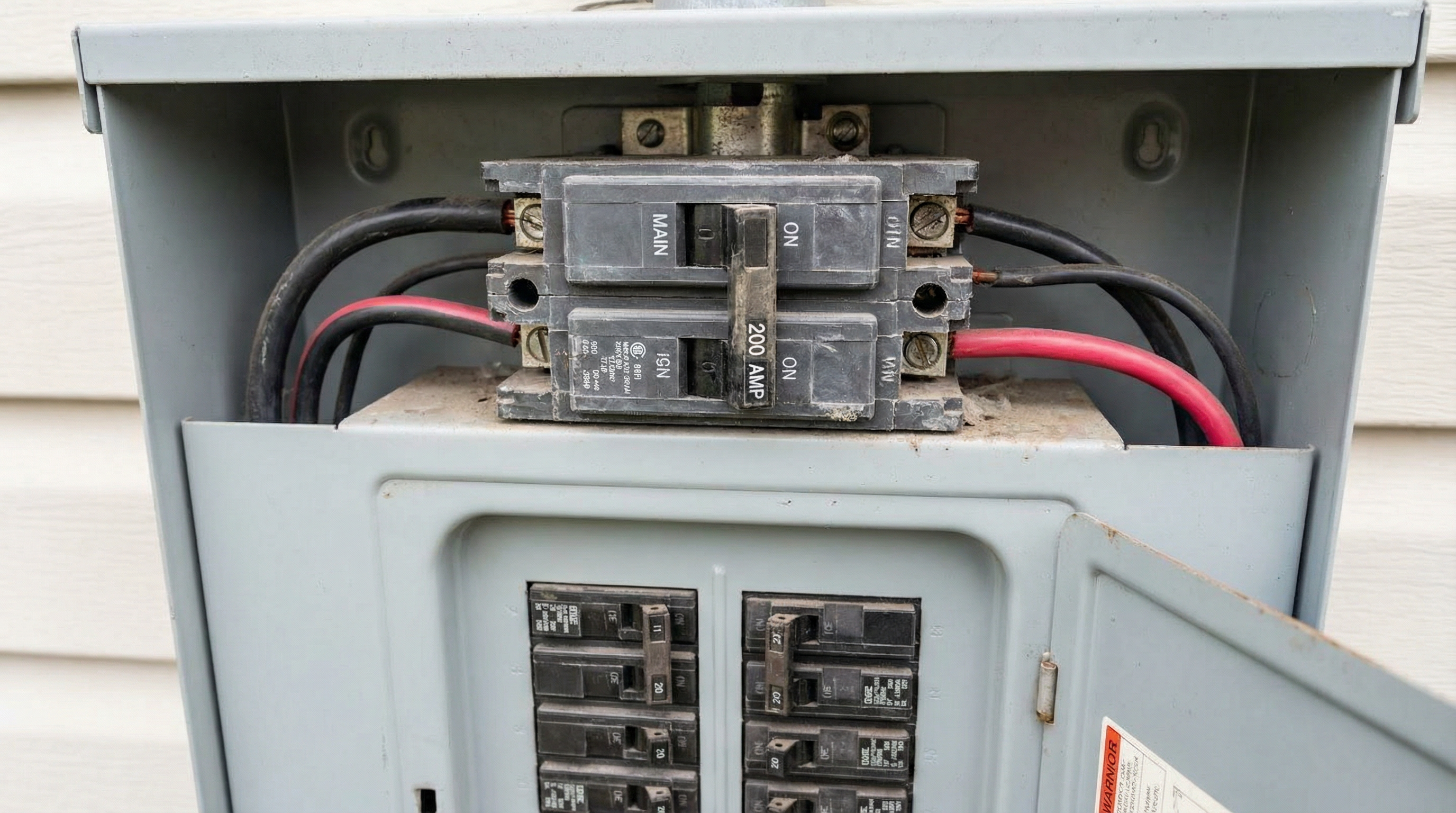
- Main Circuit Breaker: This is the largest breaker, usually at the top of the panel. It controls all the power to the house. Shutting it off disconnects your home from the grid entirely.
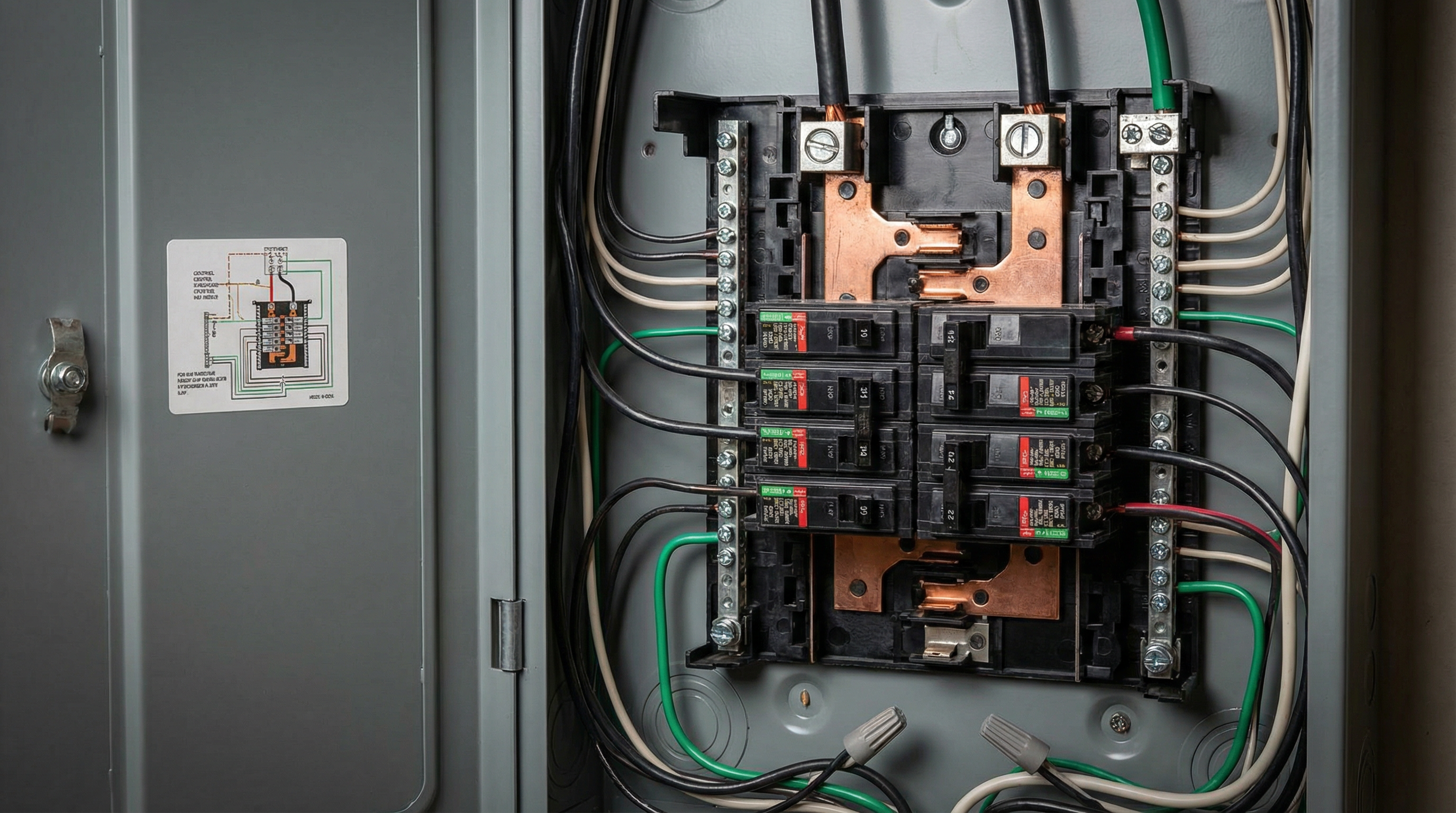
- Circuit Breakers: Each of these smaller switches controls a specific circuit in your home, like the kitchen outlets or the bedroom lights. They are rated for a specific amperage (e.g., 15-amp, 20-amp) and will trip if the current exceeds that limit.
- Bus Bars: These are live metal bars that distribute power from the main breaker to the individual circuit breakers. You will typically see two of these "hot" bus bars running down the center.
- Neutral and Ground Bars: The neutral bar is a terminal where all the white neutral wires connect, completing the circuit. The ground bar connects to the grounding electrode conductor—a copper rod driven into the earth—providing a safe path for fault currents.
How Electricity Flows Through Your Panel
The process is straightforward. Power flows from the utility pole, through your electric meter, and into the two thick black service wires connected to the main breaker. From there, it energizes the two hot bus bars. Each circuit breaker snaps onto one or both of these bars, drawing the power it needs. The electricity then flows through the breaker, into the circuit's hot wire (usually black or red), powers the devices on that circuit, and returns through the neutral wire (white) back to the neutral bar in the panel.
Why Circuit Breakers Trip
A circuit breaker's job is to protect your wiring from overheating and causing a fire. It does this by tripping (shutting off) in two primary situations:
Common Tripping Scenarios:
- Overload: This happens when you draw more power than the circuit is rated for. Plugging a space heater and a hair dryer into the same circuit in an older Mt. Lebanon home, for example, can easily cause a 15-amp breaker to trip.
- Short Circuit: A more dangerous situation where a hot wire touches a neutral or ground wire. This creates a sudden, massive surge of current, and the breaker trips instantaneously to prevent a fire or electrocution.
A breaker that trips repeatedly is a sign of a deeper problem. Never ignore it. It could indicate a dangerous wiring issue or a failing appliance. It is best to consult a qualified electrician.
Panel Location and Safety Clearances
The National Electrical Code (NEC) has strict rules about where panels can be located and the space around them. In Western Pennsylvania, these codes are enforced by local inspectors. A panel must be in a readily accessible location—not in a bathroom or closet used for storage. Furthermore, you must maintain a clear working space of at least 3 feet in front of the panel, 30 inches wide, and 6.5 feet high. This means you cannot stack storage boxes or build shelves in front of your panel. First responders and electricians need immediate, unobstructed access in an emergency.