If you live in one of Pittsburgh's classic neighborhoods like Squirrel Hill or Mt. Lebanon, you might have a charming older home with lots of character. But with that character can come an outdated electrical system, and at its heart, a fuse box. While fuse boxes and breaker panels both protect your home from electrical overloads, they do so in very different ways. Understanding these differences is key to ensuring your home is safe and can handle the demands of modern life.
What is a Fuse Box?
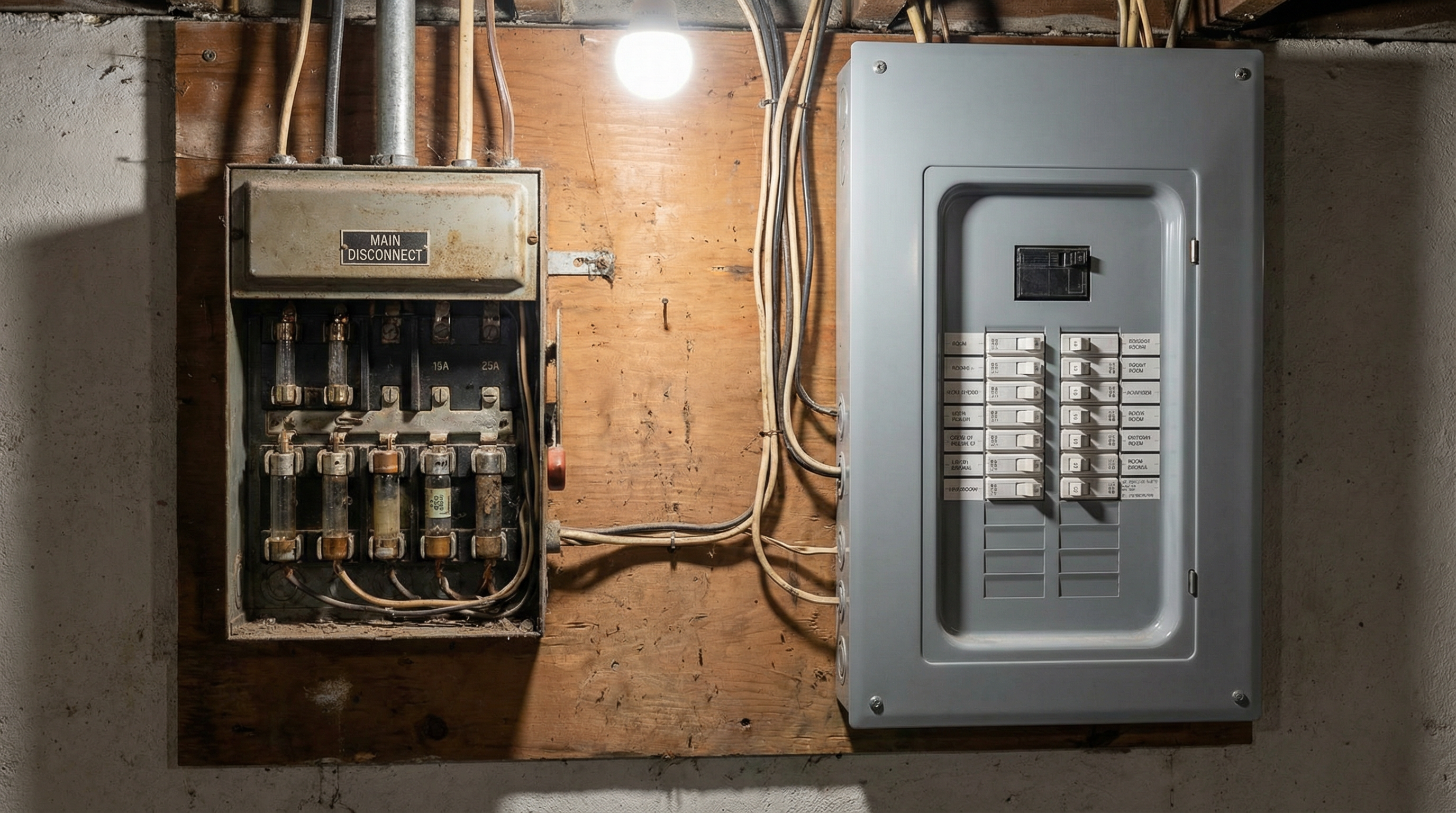
A fuse box is an older type of electrical panel that uses fuses to protect circuits. Inside each fuse is a small piece of metal that is designed to melt and break the circuit if the electrical current exceeds a safe level. This is a one-time deal; once a fuse blows, it must be replaced with a new one. Fuse boxes were the standard in homes built before the 1960s and can still be found in many older properties throughout Western Pennsylvania.
Key characteristics of a fuse box include:
- Round, screw-in fuses (Edison base) or cartridge-style fuses for larger appliances.
- A limited number of circuits, often not enough for modern homes.
- No main shut-off to turn off all power at once (in many older models).
- Requires you to have replacement fuses on hand.
What is a Circuit Breaker Panel?
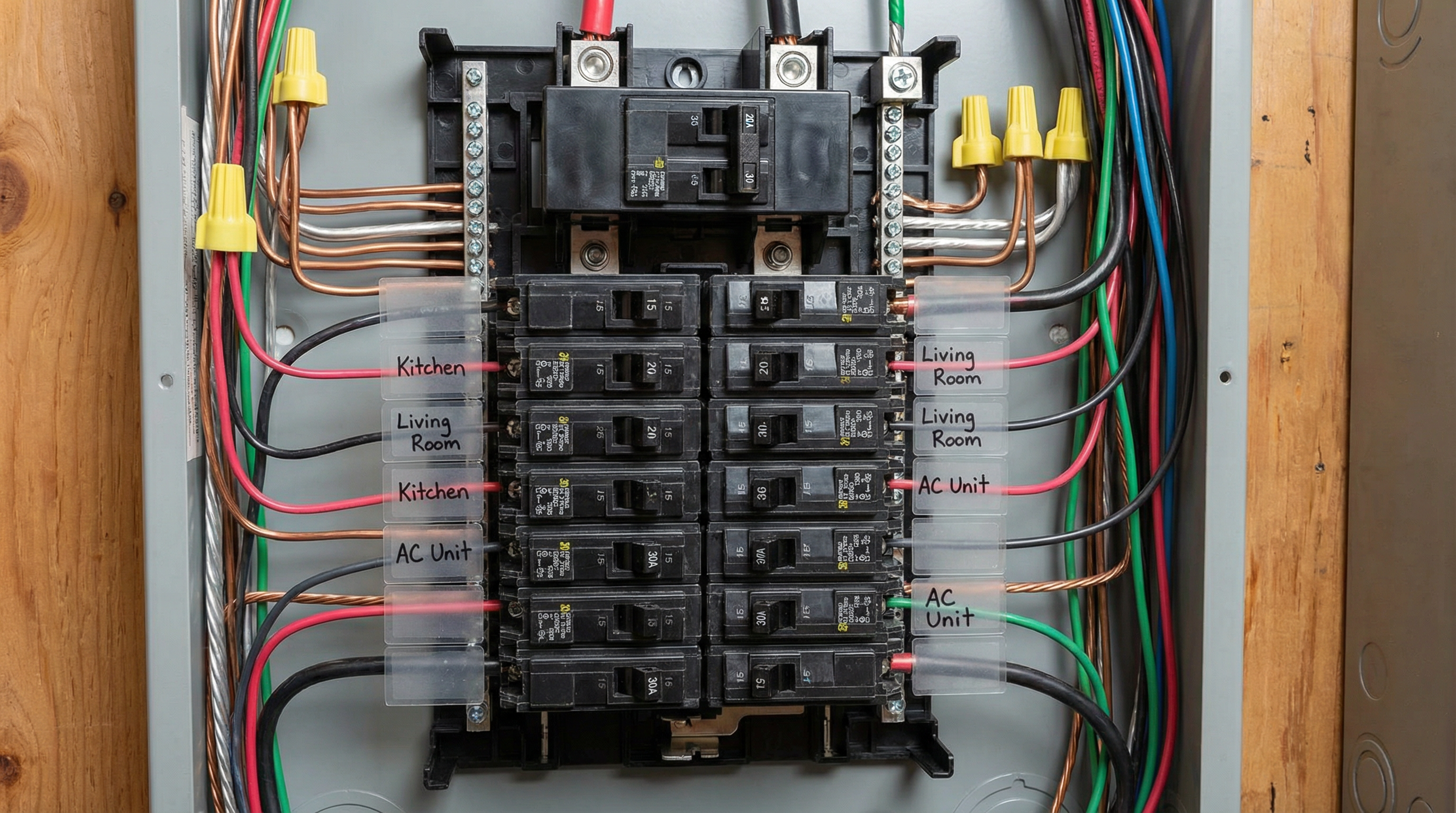
A circuit breaker panel is the modern standard for residential electrical systems. Instead of fuses, it uses circuit breakers, which are switches that automatically trip (turn off) when they detect an overload or a short circuit. The big advantage is that you don't have to replace anything. Once you've addressed the cause of the overload, you can simply flip the breaker back on. You'll find breaker panels in all new construction in the Pittsburgh area and in most updated homes.
Advantages of a circuit breaker panel include:
- Convenience: No need to buy or replace fuses. A simple flip of a switch restores power.
- Safety: Breakers are more reliable and safer than fuses. It's impossible to replace a breaker with an incorrectly rated one, a common and dangerous mistake with fuses.
- Capacity: Breaker panels can handle more circuits and higher amperages, which is essential for modern appliances and electronics.
- GFCI and AFCI Protection: Modern panels easily accommodate Ground Fault Circuit Interrupter (GFCI) and Arc Fault Circuit Interrupter (AFCI) breakers, which provide enhanced protection against electrocution and electrical fires.
Key Differences: Safety and Convenience
The most significant difference between fuse boxes and breaker panels is reusability. A circuit breaker can be reset thousands of times, while a fuse is a single-use device. This convenience is a major factor for homeowners. But the more critical distinction is safety. A common issue with fuse boxes is the temptation for homeowners to replace a blown fuse with one of a higher amperage. If a 15-amp circuit keeps blowing, someone might wrongly insert a 20-amp or even 30-amp fuse to stop the problem. This is extremely dangerous and can lead to overheating wires and a serious fire hazard.
Never replace a fuse with one of a higher rating. The fuse is a safety device, and bypassing it puts your home and family at risk. If a fuse blows frequently, it's a sign of a deeper problem that needs to be addressed by a qualified electrician.
Can a Fuse Box Handle Modern Electrical Loads?
Most fuse boxes were designed to provide 30 to 60 amps of service to a home. In the mid-20th century, this was plenty. Today, the average American home needs 100 to 200 amps to safely power everything from computers and large-screen TVs to high-efficiency HVAC systems and electric vehicle chargers. A 60-amp fuse box simply can't keep up. If you find your lights flickering when the microwave turns on, or you can't run the air conditioner and the toaster oven at the same time, your fuse box is likely at its limit.
Upgrading to a Breaker Panel in Your Pittsburgh Home
Upgrading from a fuse box to a breaker panel is a significant electrical project that should always be performed by a licensed and insured electrician. The process typically involves disconnecting power to the home, removing the old fuse box, installing the new breaker panel, and connecting all the existing circuits to the new breakers. In many cases, an upgrade will also include a service upgrade from the utility company, like Duquesne Light, to increase the total amperage available to your home. This is also a good time to address any other wiring issues and bring your home up to current electrical codes. A permit from Allegheny County or your local municipality is typically required for this type of work.
Need Professional Help?
Use our ZIP Code Electrician Finder to locate qualified professionals in your area.